



Description
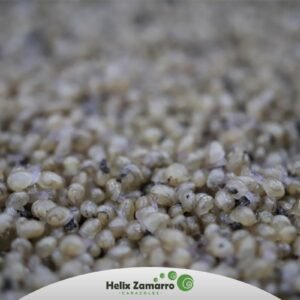
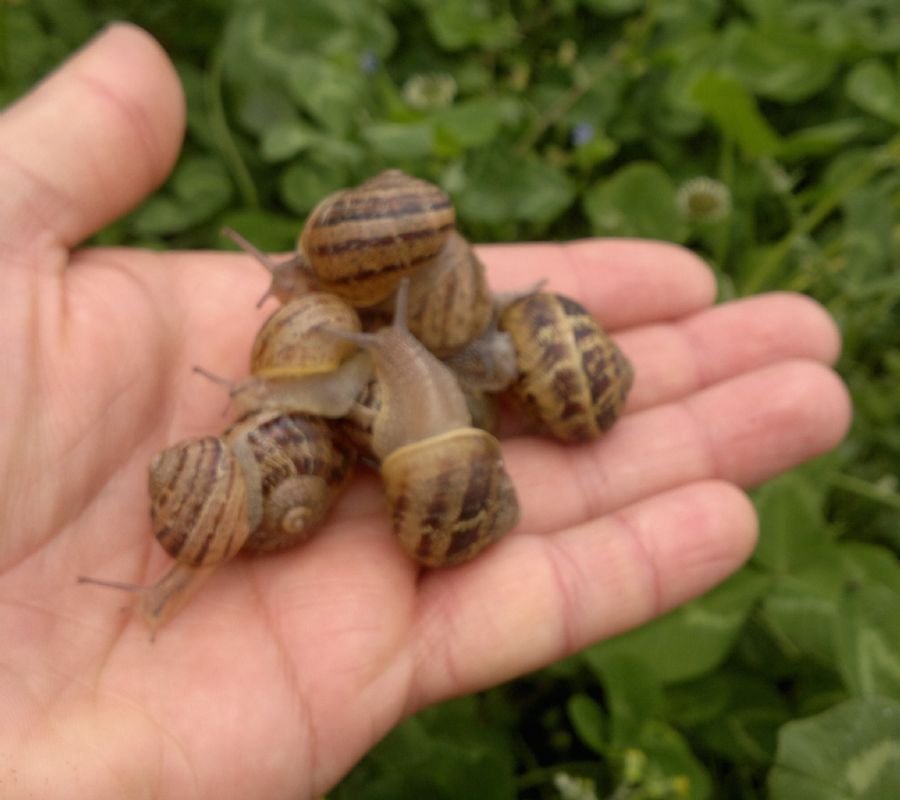
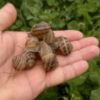
What is the Garbancero or Juvenile Snail?
The chickpea or juvenile snail IS NOT A PRODUCT IN ITSELF. RATHER WE INTEND TO GIVE AN EXPLANATION OF SOMETHING THAT IS ON THE MARKET AND THAT CAUSES PROBLEMS ON FARMS.
First of all, say that more than 10 years that we do not work or recommend this type of snail to introduce into farms. Since then, each campaign we serve between 3 y 4 farms per year with health problems.
The reason for health hazard of the chickpea or juvenile snail lies in its origin. The most common thing is that they are the waste of wholesale purges that collect wild snail. The snail that is not finished and ready for sale is used as a by-product that is sold to farms..
It is also common for this chickpea snail or juvenile comes from various farms. Which is not very encouraging either.. There are as many possibilities of contamination as the batch comes from.. Besides, these provenances, They are usually unknown.
In this case, involves introducing snails from different sources and with different possibilities of contamination within the same enclosure. Besides, This is excessive and defective manipulation. It is made thinking about the snail that is going to be consumed., not in the one that is discarded, with broken shells.
At best, It may come from a farm with a super population in the previous season.. This snail has a high chance of being parasitized or contaminated.. Excess density on farms is usually the trigger for countless health problems.
It is not advisable to confuse the chickpea or juvenile snail with the fry snail.
People often talk about snails out of ignorance.. They confuse the smallest chickpea snail, con 2-3 weeks of life with the snail fry.
The small chickpea snail (2-3 weeks of life) has a very high rate of casualties in the implementation. This is due to excessive manipulation, breaks and health problems that it carries over from its previous stage.
On the contrary the fry snail comes from a reproduction room, zero days old and prepared for transport. It has an adaptation rate to the hatchery very close to the 100%, well above the chickpea or juvenile snail and, even, above the reproductive snail with greater guarantees.
For all this, Our advice is that you activate your helical farm with fingerling snail of a reproduction room with guarantees and that offers confidence.